Humidity does affect vinyl plank flooring, but not the way it affects wood. The plank itself does not absorb humid air. Temperature swings make it expand and contract, and moisture from the slab or crawl space below can cause the damage that gets blamed on humidity.
In New Orleans, that question matters. NOAA’s 1991 to 2020 climate normals for the city’s airport put average relative humidity at 76 percent. Morning readings average 88 percent, on top of more than 63 inches of rain a year.
At TurnKey Renovators, we install luxury vinyl plank in New Orleans homes, and we plan every job around the moisture conditions this city throws at a floor.
If you already have a vinyl floor that is gapping, lifting, or smelling musty, contact us and we will help you figure out what is going on underneath.
Below, we cover how vinyl plank reacts to heat and humidity, the warning signs worth watching, where the moisture really comes from, and what makes this city harder on floors than most.
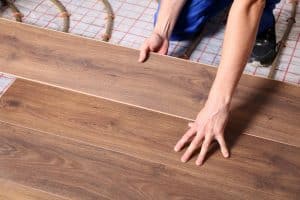 Rigid core planks can handle New Orleans humidity well when they are installed with the right gaps over a dry subfloor. The plank itself does not soak up humid air the way solid wood does. What vinyl does respond to is temperature, and in a floating floor that movement has to go somewhere.
Rigid core LVP is a click-together plank with a stone-plastic (SPC) or wood-plastic (WPC) core that usually floats over the subfloor without glue or nails. LifeProof’s installation guide states the floor must be allowed to expand and contract freely, which is why it cannot be fastened down.
These products are forgiving about the air in the room. Shaw’s Floorté WPC guide and the COREtec Pro guide both say acclimation is not required, and both give an installation range of 55°F to 85°F.
Thinner flexible vinyl is glued to the subfloor, and it is fussier. Mannington’s glue-down guide calls for the room and material to be held at 65°F to 85°F for 48 hours before, during, and after installation, and recommends keeping humidity between 35 and 55 percent. In a New Orleans house that sits unconditioned during a renovation, that is a real constraint.
The riskiest time for a vinyl floor is often not summer itself but the weeks a house stays empty with the air conditioning off. A vacant rental, a camp used on weekends, or a home mid-renovation can swing from cool nights to very hot afternoons, and the floor moves with it.
That is why manufacturers set temperature ranges for occupied rooms. LifeProof, for example, lists 50°F to 100°F for occupied spaces and says its floor should not be installed in homes that are not temperature controlled. If a house will sit unconditioned for long stretches, raise it before the product is chosen, because some planks are simply not rated for it.
In practice, the humidity question comes down to the product and the prep. The right plank on a dry, flat subfloor holds up well here. The wrong one, or the right one pinned down or laid on wet concrete, does not.
Vinyl floor problems often show up gradually. Catching them early is the difference between a repair and a replacement.
When planks separate at the short ends, or seams peak upward, the floor is moving more than it can handle. Common causes are a missing expansion gap, a floor pinned under trim or cabinets, or big temperature swings in a room that stays closed up and unconditioned.
Start at the edges. Pull the baseboard or quarter round in one spot and look for the gap along the wall. If the planks run tight to the drywall, or a heavy island sits on top of a floating floor, the floor has nowhere to go when it warms up.
This is the one to take seriously. Rigid core planks are waterproof, but Shaw’s own guide warns that excessive moisture in the subfloor can still promote mold and mildew. A waterproof surface can trap moisture underneath, where you cannot see it until the smell or the stain arrives.
Do not treat this as a cleaning problem. Lift a plank near the worst spot and check the underside and the subfloor. Dampness there means you must find the source (slab, crawl space, or leak) before any flooring goes back down.
Not every bulge is humidity. LifeProof and Shaw both warn that long periods of direct sun can discolor vinyl, and LifeProof adds that it can cause buckling. A floor that only misbehaves in front of a south- or west-facing glass door is usually telling you about heat, not moisture.
Shading solves most of it. Blinds, solar screens, or an awning over the door cut the heat load on that strip of floor, and they protect the color of the planks as well.
Other signs worth a closer look:
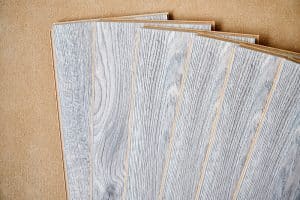 Humid room air is only part of the picture. The bigger threat is water from below, and New Orleans homes give it two main routes in, plus the leaks every house eventually has.
Concrete releases moisture, and manufacturers set limits on how much. LifeProof and Shaw both cap the slab at 8 pounds per 1,000 square feet in 24 hours on a calcium chloride test, or 90 percent relative humidity on the in-slab ASTM F2170 test. A slab over those numbers needs a moisture solution before any plank goes down, so we test first. A waterproof plank does not fix a wet slab, it only hides it.
A slab that tests high is not the end of the project. Mannington’s LockSolid guide, for example, treats readings above 8 pounds or 95 percent relative humidity as excessive and points to a moisture mitigation membrane before installation. The fix adds cost and time to the schedule. That is still far cheaper than pulling up a moldy floor later.
Older homes here are often built on raised floors. The LSU AgCenter notes that Louisiana houses were raised to allow air to circulate underneath and to protect against flood damage, and slab ranch houses came later.
That design works, but the crawl space has to stay dry. LifeProof requires the ground in a crawl space to be completely covered with 6-mil polyethylene. It also calls for at least 18 inches of clearance and vent area equal to 1.5 percent of the crawl space footage, and Shaw likewise requires 6-mil black poly over 100 percent of the crawl space earth.
A dishwasher line or a slow toilet leak can put water under a floor for weeks before anyone notices. After real flooding, FEMA’s post-Katrina guidance calls for removing vinyl tile or linoleum over wood subfloors so the wood can dry. Warranties from brands such as Mannington and Shaw also exclude moisture damage from flooding or leaks, which is one more reason to fix the source before replacing the floor.
Put the local conditions side by side and the pattern is clear.
| Local Factor | Effect on Vinyl Plank | What Helps |
|---|---|---|
| High year-round humidity | Little effect on the plank itself, but it slows drying when moisture gets underneath | Keep the house conditioned and fix leaks quickly |
| Summer heat and sun through glass | Expansion, fading, and possible buckling near doors and windows | A proper expansion gap at every wall, plus window shading |
| Slab-on-grade foundations | Moisture vapor rising into the underside of the floor | Moisture testing and a vapor retarder where needed |
| Raised homes over crawl spaces | Damp ground air can reach the subfloor from below | Full 6-mil poly ground cover and working ventilation |
The age of the housing stock matters as well. Older subfloors are often uneven, and a floating floor needs a flat base to lock tightly. Leveling is not glamorous, but it is often the step that decides whether seams stay closed.
Old houses also hide layers. A second or third layer of flooring can be buried under the one you see, from sheet vinyl to tile to plywood patches. FEMA’s flood restoration guidance warns that older vinyl tiles and adhesives, especially from before the 1970s, often contain asbestos, so layers like these should be identified before anyone starts tearing them out.
Timing matters during a renovation, too. New flooring should go in after the heavy wet work is done and the house is under air conditioning. Plaster, fresh drywall mud, and paint all release moisture, and a floor installed in a damp, unconditioned shell starts life in the worst conditions it will ever see.
Outside the walls, drainage plays a part. Downspouts that dump water against a slab, yard grading that slopes toward the house, and a crawl space with standing water after every storm all push moisture toward the floor. Walking the outside of the house after a heavy rain is one of the cheapest checks you can do before a new floor goes in, and it often explains why an old one failed.
Hurricane season and heavy rain mean water events are part of life here. The goal is a floor installed so that when water does get in, it can be found, dried, and dealt with.
Humidity alone will not ruin a good vinyl plank floor. The failures described above come from pinned edges, skipped moisture tests, bare crawl spaces, and leaks nobody caught. Each of those is preventable at installation.
When we install luxury vinyl plank, we inspect the subfloor first, and on concrete slabs we test for moisture vapor and install a moisture barrier where readings call for it. If a room needs a different product, our flooring installation team can help you choose the right one.
After installation, a few habits keep the floor in shape. Keep the house conditioned, put protectors under heavy furniture, shade the sunniest doors, and deal with any leak the day you find it. Those habits matter more to the life of the floor than the brand name on the box.
If you are replacing a floor that already failed, the old one is useful evidence. Where it gapped, where it smelled, and where it stayed dry tell us where the moisture came from, so the new floor does not fail the same way.
At TurnKey Renovators, we want to catch a moisture problem before the floor goes in, not after. To book an in-home flooring assessment, call (504) 527-8711.
Does humidity affect vinyl plank flooring?
Yes, but less than it affects wood. The plank does not absorb humid air, yet temperature swings make it expand and contract, and moisture trapped under the floor can lead to mold.
What are the downsides of luxury vinyl plank flooring?
It can fade or buckle under long periods of direct sun, it can dent under heavy furniture without protectors, and a waterproof surface can hide moisture problems underneath. Floating planks should not go under cabinets unless the manufacturer allows it.
Does luxury vinyl plank need a moisture barrier?
It depends on the product and the subfloor. Manufacturers such as LifeProof and Shaw require 6-mil polyethylene over crawl space ground, and a vapor retarder over concrete may be needed when the slab tests high or the product calls for it.
What is the acceptable moisture level for vinyl flooring?
LifeProof and Shaw, for example, allow up to 8 pounds per 1,000 square feet in 24 hours on a calcium chloride test, or 90 percent relative humidity on the ASTM F2170 in-slab test. Always check the limits for the specific product being installed.
How long can LVP stay wet?
On the surface, only as long as it takes to wipe it up, because rigid core planks resist surface water. Water that gets under the floor through edges or seams is different, and it should be dried out as soon as possible to prevent mold.
Why does vinyl plank flooring expand and contract?
Vinyl reacts mainly to temperature, growing slightly in heat and shrinking in cold. A floating floor needs room at the edges to make that movement without buckling or separating.
Do you need to leave an expansion gap for vinyl plank flooring?
Yes, for floating floors. Around walls and fixed objects, LifeProof calls for a 1/4-inch gap, and Shaw calls for 1/4 inch under 2,500 square feet and 1/2 inch for larger areas.
How to fix vinyl flooring that is expanding?
Start by freeing the edges, since trim, cabinets, or door jambs pinning the floor are common causes. Then restore the required perimeter gap and bring the room back to a stable temperature, and replace any planks that were damaged by the pressure.


 Turnkey Renovators