
- Home
- Services
- Residential Interior Renovations
- Flooring Installation
- Hardwood Flooring Installation
Hardwood flooring installation in New Orleans
At TurnKey Renovators, we install solid and engineered hardwood across Greater New Orleans, helping you choose species, stain and plank size, then handling acclimation, subfloor prep, stairs and trim. Book your free estimate and we will tell you whether solid or engineered suits your subfloor.
Wood that suits a humid house
Humidity, slab foundations and seasonal moisture swings all change how wood behaves once it is down. Pick a part of the job to see how we handle it.
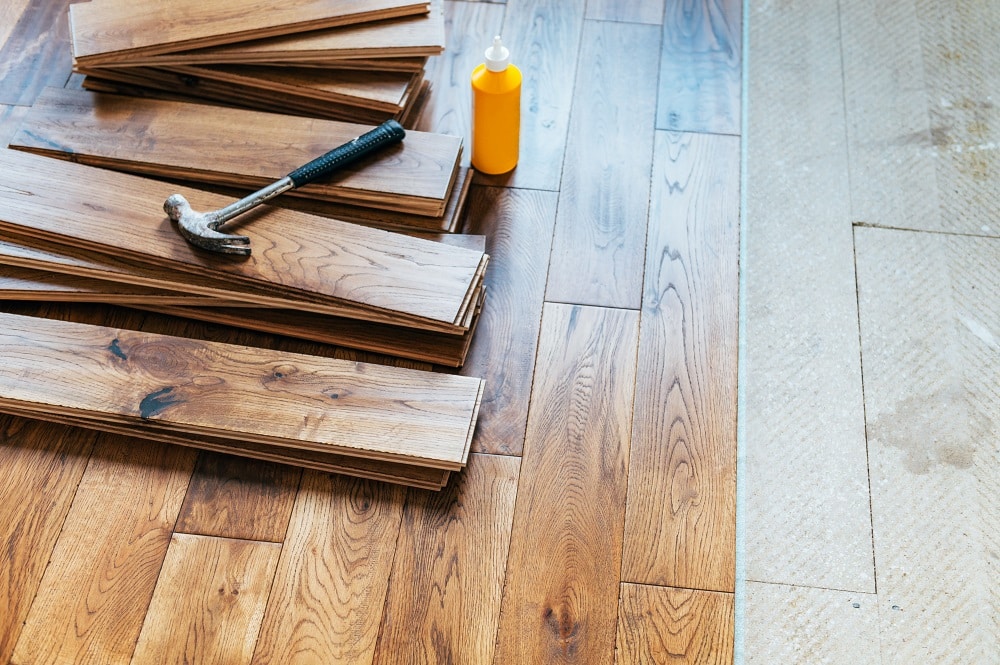
Solid hardwood
Milled from one piece of wood, solid boards take many refinishing cycles. They perform best over a wood subfloor in rooms with steady humidity.
- Many refinishing cycles
- Needs a wood subfloor
- Nailed, not floated
- Higher cupping risk on slabs
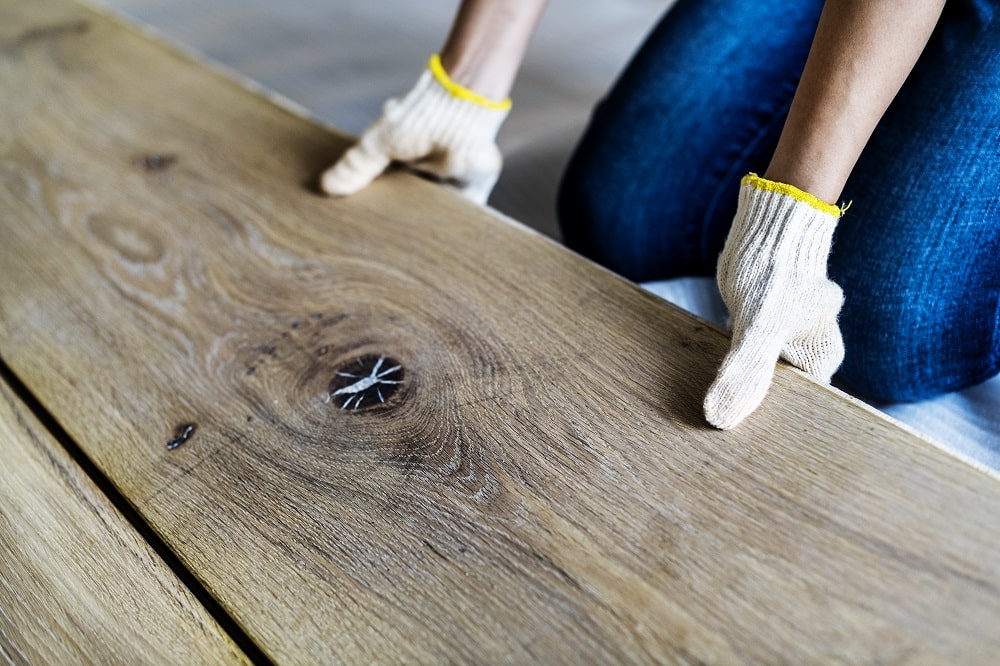
Engineered hardwood
A real wood veneer over a plywood or HDF core resists expansion and contraction, so it is the practical pick for slabs and damp rooms.
- Glued or floated on slabs
- Same species and stains
- Looks nearly identical
- Refinish count set by veneer
Species, stain and plank size
Oak and hickory are the harder domestic choices for busy rooms. Hickory rates harder than oak and resists dents better in very active spaces.
Plan My Hardwood- Oak for everyday traffic
- Hickory for the busiest rooms
- Softer species for bedrooms
- Wide range of stain colors
Stairs, transitions and trim
Tread and nosing work, room-to-room transitions and baseboards are all part of the scope, so the floor finishes cleanly at every edge.
Plan My Hardwood- Stair treads
- Stair nosing
- Transitions
- Baseboards
Solid or engineered, side by side
Both look nearly the same once installed. The difference is how they handle moisture and how many times they can be refinished.
| Question | Solid hardwood | Engineered hardwood |
|---|---|---|
| Construction | Milled from a single piece of wood | Real wood veneer bonded to a plywood or HDF core |
| Humidity | Expands and contracts more as moisture changes | More dimensionally stable in humid conditions |
| Slab foundations | Not recommended directly on a slab; needs a wood subfloor for nailing | Can be glued or floated over concrete with moisture mitigation in place |
| Refinishing | Can be sanded and refinished multiple times | One to two cycles, depending on veneer thickness |
| Best fit | Rooms above a wood subfloor with stable conditions | Slab homes and rooms with higher moisture exposure |
Six stages, acclimation included
Hardwood punishes shortcuts in this climate, so each stage is part of every job.
- 01
Subfloor check
We look for soft spots, uneven sections, moisture concerns and height problems, which also decides the right installation method.
- 02
Acclimation
The boards sit in your home, typically three to seven days, so they adjust to its humidity before they are fastened.
- 03
Installation
We fasten to the manufacturer's specs, leave the right expansion gaps and plan the layout to minimize cut pieces at thresholds and doorways.
- 04
Stairs and trim
Treads, nosing, transitions and baseboards are completed with the floor.
- 05
Cleanup
We haul off every cutoff, box and scrap before leaving.
- 06
Walkthrough
We walk the finished floor with you before closing out.
What drives the price of hardwood
Every home is different, so we price after we see the rooms. These five things set your number.
Type and species
Solid and engineered sit at different price points, and species, veneer grade and plank size shift cost within each.
Room size and layout
More square footage and more corners mean more boards and more hours.
Subfloor condition
Leveling, board repairs or moisture remediation come before the wood goes down.
Old floor removal
Tearing out and disposing of the current floor adds to the scope.
Stair work
Nosing and tread replacement add material and labor beyond the flat floor.
Your written estimate lists each of these, and we go over it line by line before any boards are ordered.
Hardwood installation across Greater New Orleans
We install hardwood in homes across Orleans, Jefferson and St. Tammany parishes, from New Orleans and Metairie to Kenner, Slidell, Mandeville and Covington.
Hardwood flooring questions
What homeowners ask most about wood floors in this climate.
Can hardwood be installed on a slab foundation?
Engineered hardwood can be glued or floated over a concrete slab with proper moisture mitigation in place. Solid hardwood is not recommended directly on a slab, because it needs a wood subfloor for nailing and is more exposed to moisture coming up from the concrete.
How long does hardwood need to acclimate before installation?
Typically three to seven days in the room where it will be installed, depending on the product and the humidity in your home. That lets the boards adjust before they are fastened down.
What is the difference between solid and engineered hardwood?
Solid hardwood is one piece of wood and supports more refinishing cycles. Engineered hardwood is a real wood veneer over a plywood or HDF core, which keeps it more stable in humid conditions. For slab homes around New Orleans, engineered is generally the better fit.
What species holds up best in high-traffic rooms?
Oak and hickory are among the harder domestic species and do well in hallways, living rooms and dining rooms. Hickory rates harder than oak and resists dents better in very active spaces. Softer species suit lower-traffic rooms like bedrooms.
Can hardwood floors be refinished?
Yes. Solid hardwood can be sanded and refinished many times. Engineered hardwood supports one to two cycles depending on veneer thickness. Either way, the floor has to be sound, with no warping or moisture damage, for refinishing to be worth it.
How long does hardwood flooring installation take?
A single room generally takes one to two days once the boards have acclimated. Multi-room projects typically run three to five days, depending on room count, subfloor condition and any stair work.
Do you install hardwood on stairs?
Yes. Tread and nosing work is included in the project scope where it is needed.
Do you handle removal of existing flooring?
Yes. If the current floor has to come out before the hardwood goes down, we remove and dispose of it as part of the project.
Ready for real wood floors?
Tell us about the project and we will come out, measure and hand you a clear written estimate with no hidden fees.
504-527-8711