
Demolition permit
The Department of Safety and Permits needs proof of liability insurance, photos of all four sides of the building and a Letter of Intent or Demolition Request form.
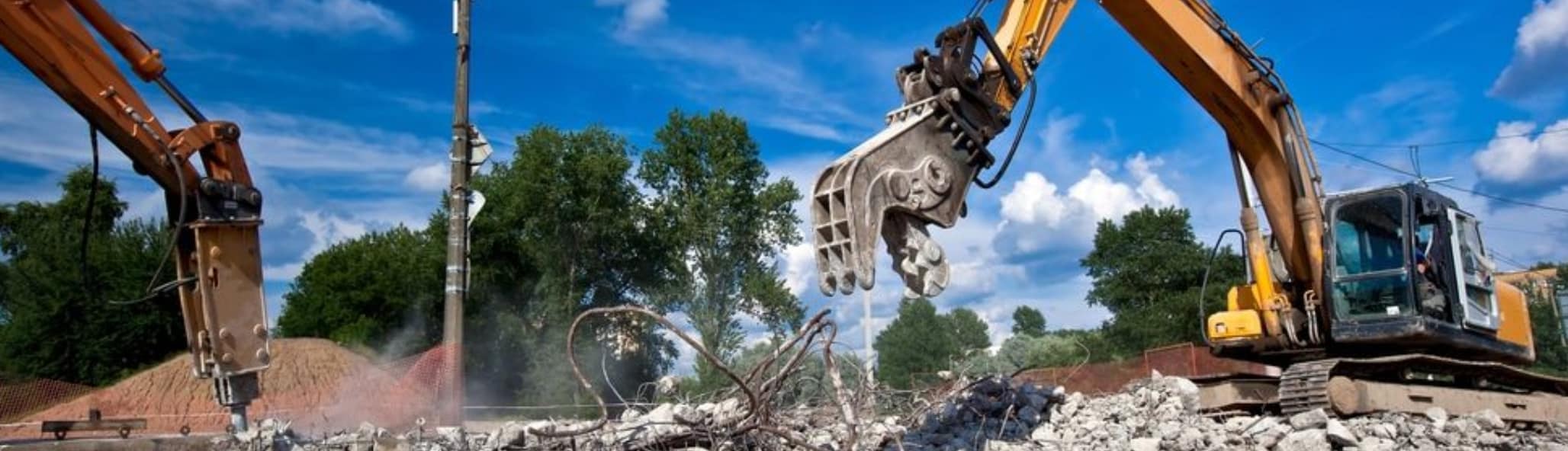
At TurnKey Renovators, we take down houses, garages, commercial buildings and interiors across Greater New Orleans, with a plan for each phase and the debris sorted and disposed of properly. Request your free quote and we will walk the site and plan the teardown with you.
Every demolition starts with what needs to come down and what needs to stay. Pick a project type to see what it covers.

We remove old structures for homeowners and property developers to make way for new construction or a renovation.

Not every job is a full teardown. We remove what needs to go inside a building and leave the structure you are keeping.

Offices, retail stores and hotels take more planning because of their size and their effect on the buildings around them.
Factories and other large facilities call for heavy-duty machinery and careful deconstruction that can save equipment or components for reuse.
Plan My DemolitionRubble is sorted so recyclable material is separated from anything that needs special disposal.
Plan My DemolitionA demolition is regulated before the first wall comes down. These are the approvals and checks that apply in New Orleans.
The Department of Safety and Permits needs proof of liability insurance, photos of all four sides of the building and a Letter of Intent or Demolition Request form.
Properties in the Neighborhood Conservation District or a local historic district need additional approvals before a demolition permit is issued.
Under the EPA asbestos NESHAP, commercial and institutional demolitions need a thorough inspection and advance notice to the delegated agency, often a state office.
Asbestos-containing waste must be sealed wet in leak-tight containers, labeled and taken to a landfill qualified to receive it.
The EPA asbestos rule excludes residential buildings with four or fewer units, but not houses torn down as part of a commercial or public project. We confirm which rules apply at the site visit.
Sources: the City of New Orleans guide to building permits and the U.S. EPA overview of the asbestos NESHAP.
Planning each phase before work begins is what keeps a demolition safe and on schedule.
We walk the site, confirm what comes down and what stays, and write a plan for each phase, noting the permits and approvals the job needs.
The right machinery for the job size speeds the work and lowers the risk to nearby structures and anything being preserved.
You know what is happening at each phase, from permit approval to the last load hauled away.
Concrete, steel and other materials are handled with the right technique, and hazardous materials like asbestos get their own procedures.
Debris is sorted, recyclables go to reuse, and we leave the site cleared and ready for what you are building next.
No two sites are alike, so we quote after we see yours. These five factors shape the price.
A garage and a multi-story building are different jobs in time, equipment and planning.
Concrete, steel and hazardous materials like asbestos each need their own techniques, equipment and handling.
How easily crews and machinery can reach the structure affects the time and equipment the job needs.
Debris volume and type, including anything that needs special handling, set the disposal cost.
City permit fees are based on the value of the work, and historic or conservation district reviews add steps.
Give us the details of your project and we will provide a written quote, so you can compare the value offered and not just the price.
Every project follows strict safety standards that protect workers, owners and neighboring properties.
Specialized machinery sized to the job means less risk to the structures and areas that need to stay.
We follow environmental guidelines, separating recyclable material from anything that needs special disposal.
We are insured, which protects you if an accident happens on your property during the project.
From our office on Tulane Avenue, we take on demolition projects in New Orleans and the surrounding parishes.
Cost, timing, debris and permits, answered plainly.
It depends on the size and complexity of the project, the materials coming down, site access and disposal fees. We visit the site and give you a quote based on your actual project.
It depends on size and complexity. Small residential demolitions may take a few days, while larger commercial or industrial demolitions can take several weeks or months.
Yes. Whether you need a partial demolition, an interior demolition or a complete site clearance, we build the plan around your project.
Yes. The Department of Safety and Permits requires a permit, with proof of liability insurance, photos of all four sides of the building and a Letter of Intent or Demolition Request form. Starting before the permit is issued brings a penalty of at least five times the permit price.
Properties in the Neighborhood Conservation District or a local historic district need additional approvals before demolition. We check your address and build that review into the schedule.
For commercial, institutional and industrial buildings, yes. The EPA asbestos NESHAP requires a thorough inspection and advance notice before any demolition. Residential buildings with four or fewer units are excluded unless they come down as part of a commercial or public project.
Debris is sorted and disposed of according to local regulations. Salvageable material may be recycled or repurposed, and non-recyclable material goes out under environmental guidelines.
Tell us about the project and we will come out, measure and hand you a clear written estimate with no hidden fees.
504-527-8711