
Broom and exposed aggregate
Brushed lines or revealed stone give reliable traction in wet weather.
- Broom is most popular
- Aggregate has excellent grip
- Both suit rainy weather
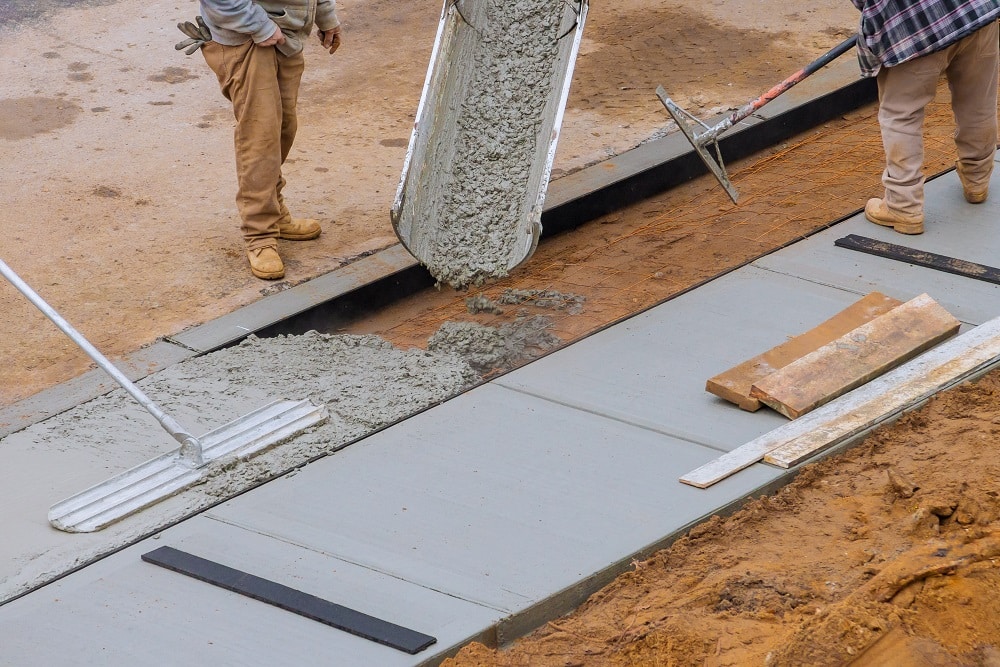
At TurnKey Renovators, we build and repair concrete walkways and sidewalks for homes and businesses across the New Orleans area, from a new front walk to a side-yard path to a full sidewalk replacement. Book your free walkway consultation and we will lay out the path with you on site.
A good walkway keeps feet off the lawn and gives visitors a safe, level surface. Pick the job that fits your property.

Replacing stepping stones, gravel or worn dirt paths, we grade the route, compact the base and pour a reinforced slab.

Cracked, heaved or sunken walks are trip hazards. When damage has spread past patching, we tear out, fix the soil and pour new.
When cracking or settling is limited to one or two panels, we replace just those after finding the cause: roots, drainage or soil movement.
Plan My WalkwayA new path from the driveway to the side gate or from the porch to a detached garage, matched to the concrete you already have.
Plan My WalkwayFor commercial properties and homeowners planning for accessibility, we build walks to ADA width, slope and surface standards.
Plan My Walkway
Stamped patterns mimic brick, flagstone, slate or cobblestone, and integral color gives a consistent tone through the whole slab.
A walkway gets wet and gets walked on daily, so grip comes first. Here is how each finish stacks up.
Brushed lines or revealed stone give reliable traction in wet weather.
Patterns and integral color deliver a paver look without laying individual pavers.
A flat, polished surface that is slippery when wet, so we keep it to covered walks and accents.
Commercial walkways on an accessible route follow the 2010 ADA Standards for Accessible Design. These are the numbers we build to.
Walking surfaces must be at least 36 inches wide, with only short pinch points allowed down to 32 inches.
Running slope can be no steeper than 1:20, and cross slope no steeper than 1:48. A running slope steeper than 1:20 is treated as a ramp.
Floor and ground surfaces must be stable, firm and slip resistant, so we pair accessible routes with a textured finish.
Where a detectable warning surface is required, its truncated domes must measure 0.9 to 1.4 inches across at the base.
Sidewalk work in the right-of-way may need a permit in New Orleans proper, and requirements vary in Jefferson Parish and nearby areas. We identify what your project needs.
Figures from the U.S. Access Board's 2010 ADA Standards, sections 302, 403 and 705.
The same sequence on every job, so nothing gets missed between layout and cure.
We check soil, tree roots and drainage, then set the best route for the path.
Existing concrete is broken up and hauled away down to soil level.
We set the slope for runoff and compact the ground into a stable base.
Wood or metal forms define width and edges, with flexible forms for smooth curves.
Rebar, wire mesh or fiber resists cracking from soil movement and temperature swings.
Concrete is spread evenly and finished to your texture, with edges tooled to a rounded profile.
Joints cut at regular intervals keep any cracks on planned lines.
Stay off the walk 24 to 48 hours for light foot traffic and up to 7 days before full use.
We price after the site assessment. These five factors move the number.
A simple 30-foot front walk costs less than a network of paths connecting several areas.
Old walkway removal, tree root work and tight equipment access add scope.
Broom is the most affordable. Aggregate, stamping and color cost more.
Extra reinforcement near large trees or on problem soil is built into the estimate.
Wider paths, controlled slopes and detectable warnings add material and labor on commercial jobs.
The estimate comes after we see the site, so there are no surprises once work starts.
We build walks for single-family homes, apartment complexes, townhome communities and commercial buildings throughout the metro.
Size, timing, cracks and commercial work, sorted by topic.
Most front walks are 3 to 4 feet wide, which fits one person comfortably or two side by side at 4 feet. Side-yard utility paths can be 2 to 3 feet. We size it to how the path is actually used.
It depends on location and scope. Work in the public right-of-way may need a permit in New Orleans proper, and requirements vary in Jefferson Parish and surrounding areas. We help identify what your project needs.
Most residential projects take 2 to 4 days, depending on length and whether old concrete comes out. Allow 24 to 48 hours before light foot traffic, and full cure reaches optimal strength at about 28 days.
Yes. Curves are common on front walks and garden paths, and flexible forms keep the width and thickness consistent through every arc.
Expansive clay soil, tree roots under the slab, poor sub-base compaction and control joints spaced too far apart. Proper preparation and reinforcement at install time cut these risks significantly.
We match thickness, grade and finish type as closely as possible. New concrete looks lighter than aged concrete at first, and weathering evens out the difference over several months.
Yes. We install and repair walks for commercial buildings, apartment complexes and townhome communities, including ADA compliance, heavier traffic and coordination with property managers.
Standard residential walkways are poured at 4 inches. Paths that carry heavier loads such as lawn equipment may benefit from 5 inches, and we assess the intended use during the site visit.
Tell us about the project and we will come out, measure and hand you a clear written estimate with no hidden fees.
504-527-8711