

New Orleans air is damp all year. The US Forest Products Laboratory’s Wood Handbook shows wood sitting in outdoor air here holding between 14.0 and 15.3 percent moisture in every month, while Phoenix drops as low as 4.6 percent.
That damp air is the backdrop to every roof leak, storm and burst pipe a New Orleans wall goes through. It is also why the same question comes up again and again after water damage: can this wall be patched, or does the drywall have to come out?
Most drywall damage is a patch job. Some of it is not, and patching board that should be replaced only hides the problem until it shows up again.
At TurnKey Renovators, we handle drywall from installation to repair and custom finishing across New Orleans, for homes and businesses alike.
If you are looking at a stained, swollen or broken wall and are not sure which way to go, contact us and we will help you sort it out.
This guide covers the thresholds that decide it: what can be patched, which moisture signs mean the board has failed, what behind the wall changes the job, and why New Orleans homes push more walls toward replacement.
Drywall can usually be patched when the damage is small, the board around it is firm and dry, and whatever caused it has stopped. Two kinds of damage usually fall on that side of the line.
Dents, small holes, hairline cracks, popped fasteners and scuffs are surface problems. The gypsum core and the paper facing around them are still intact, so compound and paint can restore the wall.
Our guide to common drywall problems and how to fix them walks through those repairs one at a time, so we will not repeat them here.
The real test is what surrounds the damage. If the board next to a hole is firm, dry and clean at the edges, a patch has something solid to bond to.
A single leak of clean water does not automatically condemn a wall. The EPA’s mold course says drywall may be dried in place if there is no obvious swelling and the seams are intact.
Timing matters. The EPA says water-damaged areas should be dried within 24 to 48 hours to prevent mold growth, and that in most cases mold will not grow if wet materials dry in that window.
The same course warns that the wall cavity is the hardest area to dry and should be ventilated when the board stays in place. The EPA also stresses fixing the water problem itself, warning that if you clean up mold but do not fix the water problem, the mold problem will most likely come back.
Once the source is fixed and the wall is dry and firm, a stained but sound wall usually needs refinishing, not new board. Our interior painting service covers that last step.
Water is what turns most patch jobs into replacements. These are the signs that the board itself has failed, and no amount of compound will bring it back.
The EPA’s rule for wet drywall has a second half. If there is obvious swelling, or the seams have opened, removal is necessary.
FEMA and the American Red Cross describe the same failure in their guide, Repairing Your Flooded Home. Wallboard becomes very fragile if it stays wet for long and will fall apart when bumped.
A soft spot that gives under your thumb, a bulge you can see with a flashlight held flat to the wall, or a joint that has split open are all signs the board has crossed that line.
Ceilings fail the same way, only overhead. The FEMA and Red Cross guide tells homeowners to check for sagging ceilings and to replace a ceiling made of wallboard if floodwater went above it.
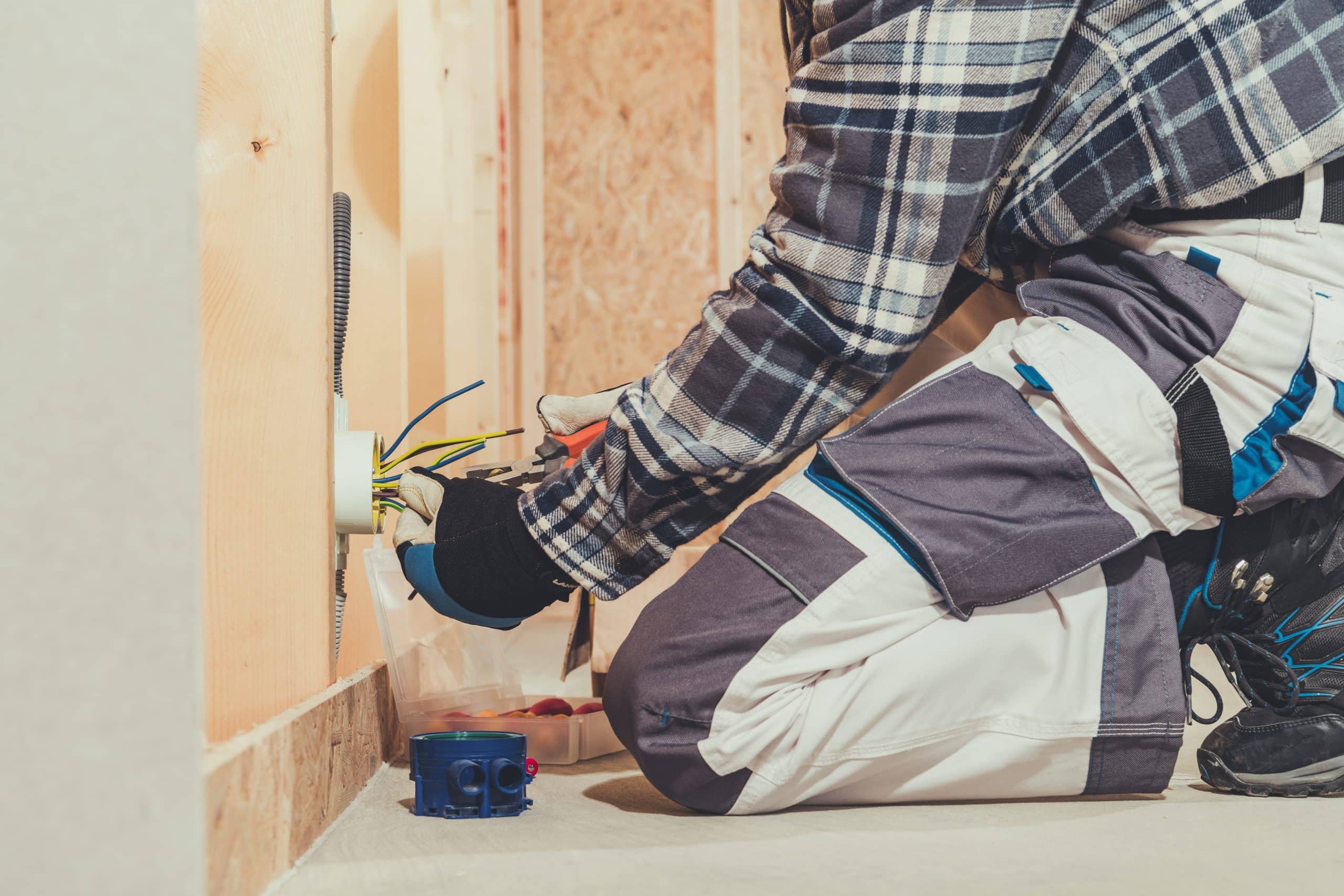 Floodwater changes the answer even when the wall looks fine afterward. The FEMA and Red Cross guide says wallboard acts like a sponge, drawing water up above the flood level, and that once it dries there will still be mud and contaminants dried inside.
For that reason, the guide recommends throwing out flooded wallboard. Its one exception is wallboard soaked by clean rainwater, which can be dried in place with plenty of fresh air moving through the area.
The guide is specific about height. If floodwater soaked the wallboard at least 4 feet above the floor, all of it should come down and be replaced. If the water stayed under 4 feet, the lower 4 feet comes out, and the gap can be filled with 4 by 8 foot sheets installed sideways.
Two details make that cut less daunting. Wet wood studs and sills do not need to be replaced if they are allowed to dry properly. The guide also notes that wiring usually runs at the same height as your electrical outlets, which is worth knowing before anyone cuts.
If the water carried sewage or other contamination, the EPA advises calling in a professional with experience in buildings damaged by contaminated water.
The EPA says absorbent or porous materials may have to be thrown away if they become moldy. Mold can grow into the spaces and crevices of the material, so it may be difficult or impossible to remove completely. Its mold course lists drywall and gypsum board among the water-damaged materials that may have to be discarded.
Size decides who should handle it. The EPA says a moldy area under about 10 square feet, roughly a 3 by 3 foot patch, is in most cases a job you can handle yourself.
Above 10 square feet, or after a lot of water damage, the EPA points people to its guidance on mold remediation in schools and commercial buildings. Its mold course sorts jobs into small, medium (10 to 100 square feet) and large (more than 100 square feet).
Bathrooms are where many New Orleans homeowners first see mold on walls. Our post on preventing mold and mildew in a New Orleans bathroom covers the habits that keep it from starting.
Not every replacement starts with a stain. Some walls need new board because of how they broke, and some because of what sits behind them.
A doorknob hole or a dent in otherwise solid board is a patch. Damage that runs across a taped seam, crushes an outside corner, or breaks up a large part of a sheet is a different job.
In those cases, cutting back to the nearest framing and fitting a new section usually gives a flatter, stronger wall than building compound over broken gypsum. It also lets you see the framing, wiring and insulation behind the damage before the wall is closed again.
Our simple guide to installing drywall shows how a new sheet is measured, hung and fastened, which is the same work a replacement section involves.
A wall can look dry on the face while the insulation behind it is still soaked. The FEMA and Red Cross guide is direct about this: if there is wet insulation, you will have to remove the wallboard in order to take out all the insulation.
What happens to the insulation depends on the type. Fiberglass batts should be discarded if they are muddy, and flooded cellulose should be replaced because it holds water for a long time and can lose its antifungal and fire retardant abilities.
Rigid foam insulation, which the guide calls Styrofoam, survives best and may only need to be hosed off. Even then, the board in front of it still has to meet the same swelling, seam and floodwater tests above.
 If your house has plaster walls rather than drywall, the answer is different. The FEMA and Red Cross guide says plaster survives a flood better than wallboard and should not have to be replaced, but it takes a very long time to dry.
The exception is plaster that separates from the wood laths as it dries. At that point, the guide says, the wall will have to be removed and replaced.
Paint matters too. Under the EPA’s Lead Renovation, Repair and Painting rule, firms doing work that disturbs lead-based paint in homes built before 1978 must be EPA or state certified and must use certified renovators who follow specific work practices.
Cutting out a painted wall in an older house disturbs that paint, so the age of the home belongs in the replace-or-patch d

 Turnkey Renovators