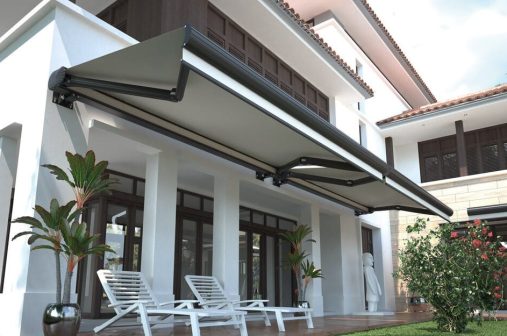
A short drive across the parish line puts you in a different housing market and under a different set of rules. Metairie homes are mostly mid-century, New Orleans homes run much older, and the city’s historic district reviews do not follow you out. Federal flood rules and the weather do.
Planning a renovation in Metairie is not the same as planning one a few miles east in New Orleans. The houses are different ages, the building types are different, and one layer of review that shapes many New Orleans projects is simply not there.
Some things do not change at all. Flood maps, the federal 50 percent rule for improvements in flood zones, lead-safe work in older homes, and the heat and rain are the same on both sides of the line.
At TurnKey Renovators, we take on residential and commercial renovation work across the New Orleans area, and Metairie is one of the communities we serve.
If you are weighing a project on a Metairie property and want to know what applies to it, contact us and we will help you sort out the scope.
This guide covers what is different about Metairie, the historic rules that stay inside New Orleans, the flood rules that do not, and how the age of the house shapes the plan.
The biggest differences start with where Metairie sits on the map and when most of its houses went up. Both affect what a renovation involves before any design work begins.
Metairie is not a city. The US Census Bureau counts it as a census designated place, which its glossary describes as a statistical counterpart of an incorporated place that is not legally incorporated and has no officials elected to serve traditional municipal functions.
The Census Bureau’s own map data places Metairie inside Jefferson Parish. That means the City of New Orleans boards and commissions that review projects in New Orleans neighborhoods do not have a role there.
It also means you should not assume a New Orleans rule, form or fee applies to a Metairie address. Local requirements for your project come from local authorities, alongside the federal programs covered below, so confirm them for your address before work starts.
Metairie’s homes are younger than New Orleans homes, but they are not new. The Census Bureau’s 2019 to 2023 American Community Survey puts the median year built for Metairie at 1972, against 1959 for the City of New Orleans.
Of about 65,800 housing units in Metairie, roughly 41,700, or 63 percent, were built between 1950 and 1979. The 1960s alone account for more than 16,200 of them.
New Orleans skews far older. The same survey counts about 62,600 New Orleans units built in 1939 or earlier, close to a third of the city’s housing, while Metairie has fewer than 1,700 from that era.
In practice, that means a typical Metairie project starts with a house from the 1950s, 1960s or 1970s that has its own layout, materials and decades of updates. Our page on renovation work in Metairie covers the projects we take on there.
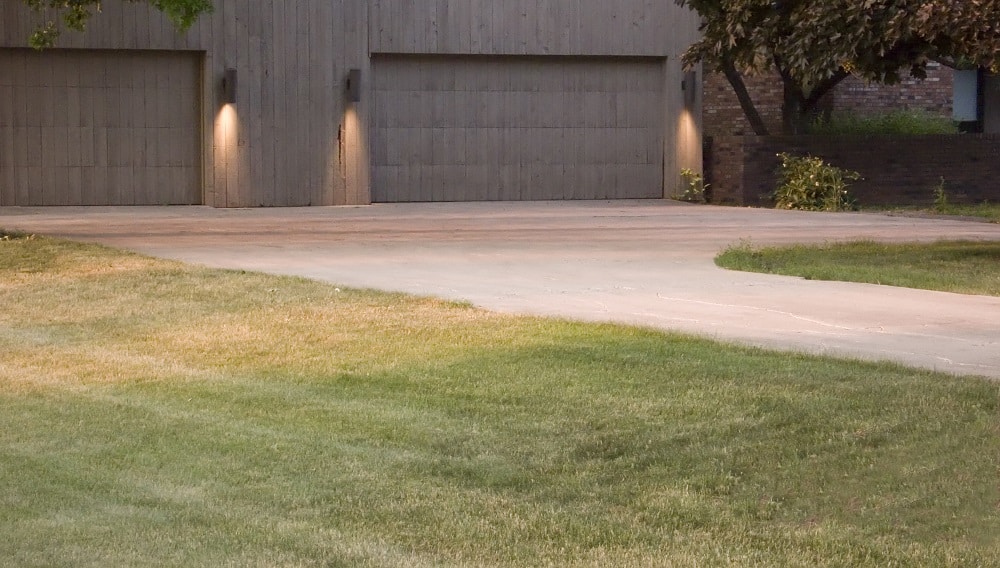 The building types differ too. In Metairie, about 61 percent of housing units are single-family detached houses, compared with about 46 percent in New Orleans.
Two-unit buildings, the doubles common in many New Orleans neighborhoods, make up about 15 percent of New Orleans housing and only about 4 percent of Metairie’s.
For many renovations inside New Orleans historic districts, the Historic District Landmarks Commission (HDLC) is one of the first stops. Its reach is the city’s locally designated districts and landmarks, so a Metairie project does not go through it.
The HDLC’s frequently asked questions page says New Orleans has 18 local historic districts, designated by the New Orleans City Council. They include neighborhoods such as Bywater, the Garden District, Mid City, Treme and Uptown.
Inside those districts, the city says a Certificate of Appropriateness is required for work on the exterior of all buildings, and for individually designated landmarks. That covers repairs, alterations, additions, demolition, relocation, new construction and site work such as fencing or paving.
That review reaches window, porch, siding and addition work on every building in those districts. Our historic home renovation page explains how we approach that kind of property.
The HDLC’s reach is narrower than many owners expect. The commission says it only has jurisdiction over the exterior of properties, so kitchens, bathrooms and other interior work fall outside its review.
It also does not control the color a building is painted. The commission does regulate brick color, roofing material color and painting previously unpainted masonry, and local district designation does not affect a property’s use or zoning.
The city says applications that staff can approve normally take 3 to 5 days. Larger changes may go to the Architectural Review Committee, and projects involving demolition or new construction can need the full commission.
The HDLC collects no fees itself. The city notes, however, that a 50 percent surcharge is added to the permit fee and plan checking fee collected by Safety and Permits.
None of this applies to a Metairie address. That removes a review step and its timeline, but it does not remove the flood rules that follow.
Flood rules are where Metairie and New Orleans look the most alike. The key ones come from the National Flood Insurance Program (NFIP), a federal program, so they do not depend on which side of the line you are on.
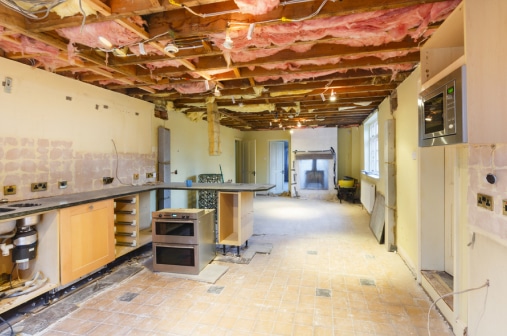 Federal regulations at 44 CFR 59.1 define a substantial improvement as any reconstruction, rehabilitation, addition or other improvement whose cost equals or exceeds 50 percent of the structure’s market value before construction starts.
The same section defines substantial damage as damage of any origin where restoring the structure to its condition before the damage would cost 50 percent or more of its market value before the damage.
When either line is crossed, FEMA says every aspect of the structure must be brought into compliance with the community’s floodplain regulations. For a house that sits low in a high-risk zone, that can change a kitchen and bath project into a much bigger one.
Additions count as improvements, which our post on expanding a home without losing the yard covers in detail.
FEMA’s Substantial Damage Quick Guide says only the market value of the structure is counted. The value of the land does not raise the threshold.
Communities can be stricter than the federal baseline. FEMA notes that a community may adopt a higher standard, such as 45 percent of market value, or add up repairs over a period of time, and in that case the community’s standard applies.
FEMA is also clear about who makes the call. Substantial damage determinations are made by a community’s building official or floodplain administrator, and FEMA and insurance carriers do not make them.
After a flood, the repair scope itself can push a job toward the line. Our guide to when drywall needs replacing instead of patching shows how quickly flood repairs grow, and our post on demolition versus renovation looks at the bigger decision some owners face.
The federal definition has an exception that matters far more in New Orleans than in Metairie. Under 44 CFR 59.1, substantial improvement does not include an alteration of a historic structure, as long as the alteration does not prevent the structure from staying designated as historic.
The regulation limits that to structures individually listed on the National Register of Historic Places, certified as contributing to a registered historic district, or individually listed on an approved state or certified local inventory.
The HDLC counts 21 National Register districts in New Orleans, and a building that contributes to a registered district can fit that definition. For a typical 1960s or 1970s Metairie house, plan on the standard rule unless you confirm the house is listed.
FEMA says flood maps show how likely an area is to flood. Any place with a 1 percent or higher chance of flooding each year is considered high risk, which FEMA translates into at least a one-in-four chance of flooding during a 30-year mortgage.
The FEMA Flood Map Service Center is the official place to find those maps. FEMA also notes that permits are required for all repairs in the special flood hazard area, regardless of damage determinations.
Put the housing data and the rules side by side and the planning differences between the two places become clear.
| Factor | Metairie | City of New Orleans |
|---|---|---|
| Median year built | 1972 | 1959 |
| Built 1939 or earlier | About 3 percent of homes | About 32 percent of homes |
| Single-family detached | About 61 percent | About 46 percent |
| HDLC exterior review | Does not apply | Required in 18 local districts and for landmarks |
| NFIP 50 percent rule | Federal rule, decided by local officials | Federal rule, decided by local officials |
Housing figures are Census Bureau American Community Survey estimates for 2019 to 2023. The rows for rules come from the City of New Orleans HDLC and FEMA.
Age matters most when the work disturbs paint. Under the EPA’s Lead Renovation, Repair and Painting rule, firms doing renovation, repair and painting work that disturbs lead-based paint in homes built before 1978 must be EPA or state certified and must use certified renovators who follow specific work practices.
The EPA warns that this work can create hazardous lead dust when surfaces with lead paint, even from many decades ago, are disturbed. About 70 percent of Metairie’s housing units were built before 1980, so many of them fall on the older side of that 1978 line.
The weather does not change at the parish line. NOAA’s 1991 to 2020 climate normals put average yearly rainfall at 63.35 inches at the New Orleans Airport station and 60.12 inches at New Orleans Lakefront Airport.
Both stations average about 85 days a year at 90 degrees or hotter. Freezing nights are rare, about 5 a year at the airport and about 2 at Lakefront.
Material choices that suit a New Orleans renovation suit a Metairie one for the same reasons.
A mid-century Metairie house often needs a decision on how far to go. Updating a kitchen and a bath is one scope, and opening the whole house is another, especially if the 50 percent rule could come into play.
Our whole home renovation service covers the larger version of that project. Our guide to creating a renovation budget that works helps set the numbers before the plans are drawn.
Renovating in Metairie usually means working on a house from the 1950s to the 1970s, on its own lot, with no New Orleans historic district review. That can make the path to a start date shorter.
It does not make the project rule-free. The federal 50 percent rule, FEMA flood zones and the EPA’s lead-safe requirements apply the same way in Metairie as they do in the city, and local officials decide how the flood rules apply to your address.
The best time to sort those questions out is before the design is final. Knowing the flood zone, the house’s age and the likely scope early keeps the plan and the budget honest.
At TurnKey Renovators, we take on renovation projects in Metairie as well as in New Orleans. To talk through what your project involves, call us at (504) 527-8711.
Does Metairie have to follow New Orleans historic district rules?
No. The New Orleans Historic District Landmarks Commission reviews exterior work in the city’s 18 local historic districts and on designated landmarks. Metairie is outside the City of New Orleans, so that review does not apply there, though you should still confirm the local requirements for your address.
What is the 50 percent rule for renovations?
Under federal NFIP regulations, a substantial improvement is any improvement whose cost equals or exceeds 50 percent of the structure’s market value before construction starts. When a project crosses that line, FEMA says the structure must be brought into compliance with the community’s floodplain regulations. Substantial damage follows the same 50 percent test for repairs.
Does the 50 percent rule apply in Metairie?
The rule comes from the federal National Flood Insurance Program, not from the City of New Orleans, so it is not limited to the city. How it applies to a specific house depends on the flood zone and on the local building official or floodplain administrator, who makes the determination.
Does market value include the land?
No. FEMA’s Substantial Damage Quick Guide says only the market value of the structure is counted.
How old are most houses in Metairie?
The Census Bureau’s 2019 to 2023 American Community Survey puts Metairie’s median year built at 1972. About 63 percent of its housing units were built between 1950 and 1979, and fewer than 3 percent were built in 1939 or earlier.
Do Metairie renovations need lead-safe work practices?
They do when the home was built before 1978 and the work disturbs lead-based paint. The EPA requires firms doing that work to be EPA or state certified and to use certified renovators who follow specific work practices. About 70 percent of Metairie’s homes were built before 1980, so the construction year is worth confirming early.
Does the HDLC control paint colors in New Orleans?
No. The HDLC says it does not have jurisdiction over the color a building’s exterior is painted. It does regulate brick color, roofing material color and painting previously unpainted masonry, and it only reviews exterior work.
How do I find the flood zone for a Metairie property?
FEMA’s Flood Map Service Center is the official online source for its flood hazard maps. FEMA considers any area with a 1 percent or higher chance of flooding each year to be high risk. Checking the zone before budgeting tells you whether the 50 percent rule could shape your project.



 Turnkey Renovators